|
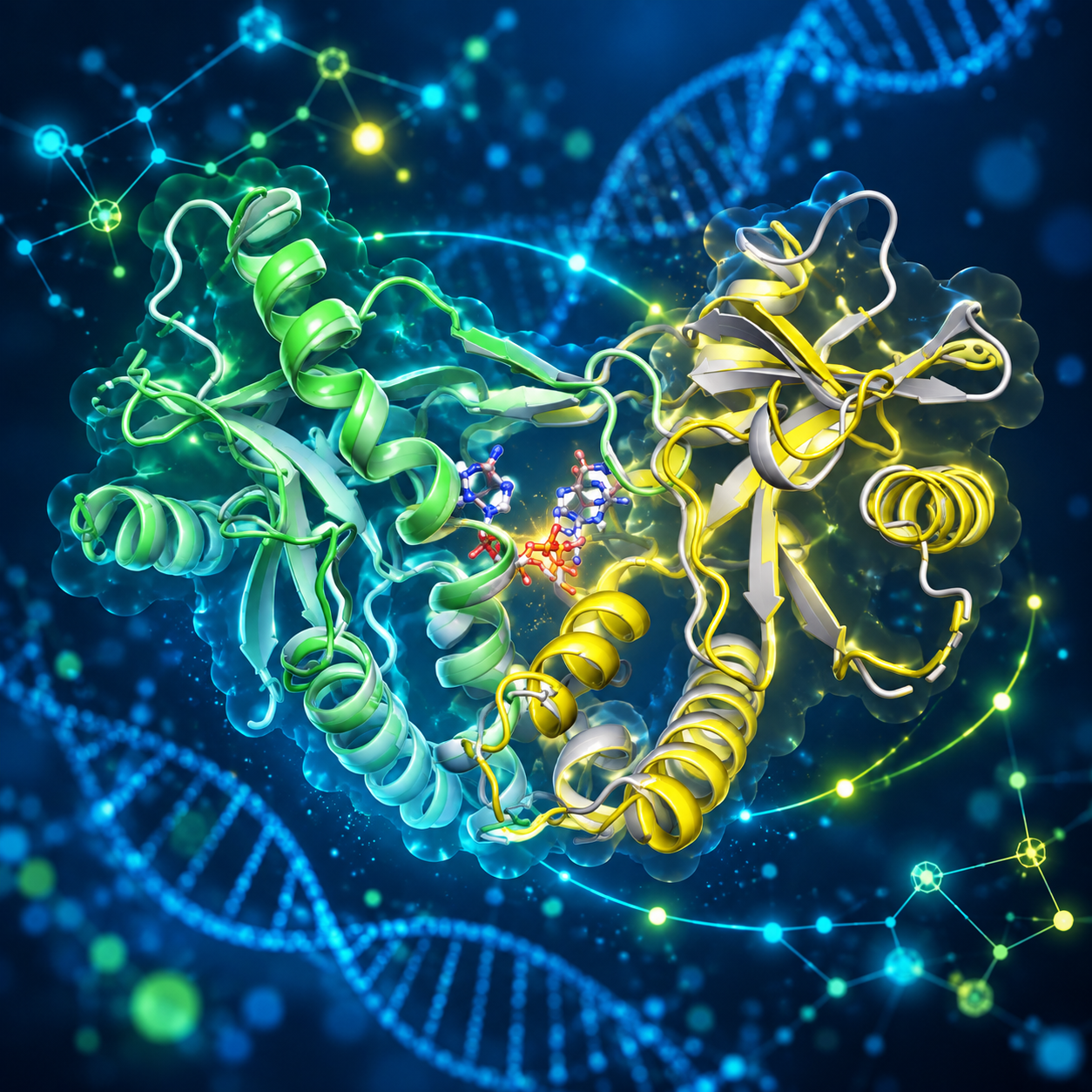
STING (Stimulator of Interferon Genes), encoded by the STING1 gene (also known as TMEM173), is a key mediator of innate immune signaling. Upon detection of cytosolic DNA by cGAS, the second messenger 2′3′-cGAMP is produced and binds to STING, triggering downstream signaling that induces type I interferons and pro-inflammatory cytokines through the IRF3 and NF-κB pathways. This positions STING as a central regulator of antiviral defense and immune surveillance.
The therapeutic relevance of STING spans multiple disease areas. Small-molecule STING agonists are actively investigated as cancer immunotherapy agents, antiviral therapeutics, and vaccine adjuvants. Dysregulation of the cGAS–STING pathway is also implicated in inflammatory and autoimmune diseases, further highlighting its broad biological and therapeutic relevance.
The OTAVA STING Agonist Library was developed using a ligand-based cheminformatics workflow designed to identify structurally diverse small molecules resembling validated human STING agonists within the OTAVA compound stock.
The following computational approaches were employed during the library design process.
1. Reference Set of Validated STING Agonists
A curated reference set was assembled from experimentally validated, non-nucleotide agonists of human STING reported in the scientific literature. The reference compounds were selected to represent distinct chemotypes and to cover diverse regions of chemical space associated with STING activation:
-
diABZI — a diamidobenzimidazole (benzimidazole chemotype) [1]
-
MSA-2 — a benzothiophene-based agonist [2]
-
SR-717 — a non-nucleotide direct cGAMP mimetic [3]
-
α-mangostin — a xanthone-scaffold natural agonist [4]
The chemical structures of all reference compounds were verified against public chemical databases prior to use.
2. Molecular Representation and Similarity Screening
Each compound in the OTAVA stock was encoded using Morgan fingerprints (ECFP4, 2048 bits), capturing its structural features as circular substructure patterns.
Tanimoto similarity was then computed between every stock compound and the reference set, and each molecule was assigned the maximum similarity to its nearest validated agonist. This approach ranks the entire stock by structural resemblance to known STING-active chemotypes.
The full OTAVA compound stock, comprising approximately 300,000 small molecules, was screened in this manner.
3. Similarity-Based Selection
Compounds were prioritized according to their maximum Tanimoto similarity to the reference agonists. A similarity threshold was applied to retain molecules with meaningful structural relatedness to validated STING chemotypes while excluding structurally unrelated compounds.
This step ensured that the resulting set was focused on the chemical space relevant to STING agonism rather than diluted with dissimilar structures.
4. Drug-likeness Filtering
The selected compounds were subsequently filtered using Lipinski's Rule of Five and related physicochemical criteria to ensure favorable drug-like profiles:
-
Molecular weight ≤ 500 Da
-
LogP ≤ 5
-
Hydrogen bond donors ≤ 5
-
Hydrogen bond acceptors ≤ 10
-
Topological polar surface area ≤ 140 Ų
-
Rotatable bonds ≤ 10
The final library exhibits a balanced, drug-like physicochemical profile (median molecular weight ~323 Da, median LogP ~2.8, median TPSA ~74 Ų), consistent with favorable properties for biological evaluation and further optimization.
The resulting OTAVA STING Agonist Library contains more than 2,000 structurally diverse compounds prioritized based on their similarity to validated human STING agonists.
The library combines:
-
a validated multi-chemotype reference set
-
fingerprint-based similarity screening
-
drug-likeness optimization
making it a valuable resource for discovering novel small-molecule STING modulators for cancer immunotherapy, antiviral research, and innate immunity studies.
All the compounds are in stock, cherry-picking is available.
The libraries (DB, SD, XLS, PDF format) as well as the price-list are available on request. Feel free to contact us or use the online form below to send an inquiry if you are interested in obtaining this library or need more information.
Request Your Library Today! Fill out the form:
References
[1] Ramanjulu, J. M. et al. Design of amidobenzimidazole STING receptor agonists with systemic activity. Nature 564, 439–443 (2018).
[2] Pan, B. S. et al. An orally available non-nucleotide STING agonist with antitumor activity. Science 369, eaba6098 (2020).
[3] Chin, E. N. et al. Antitumor activity of a systemic STING-activating non-nucleotide cGAMP mimetic. Science 369, 993–999 (2020).
[4] Zhang, Y. et al. Identification of α-mangostin as an agonist of human STING. ChemMedChem 13, 2057–2064 (2018).
|

 HOME
HOME Overview